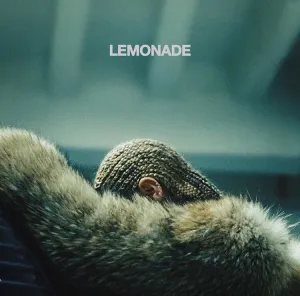
On April 23, 2016, Beyoncé Giselle Knowles-Carter did something no artist of her magnitude had done before she released a masterpiece without a single warning. No lead singles. No press junkets. No carefully engineered rollout. Just a one-hour HBO special that aired on a Saturday night and cracked the internet clean in two.
The format was the message. In an era where every album drop came with months of calculated teasers and streaming deals, Lemonade arrived like a storm, sudden, total, and impossible to look away from. Beyoncé understood that the element of surprise was its own kind of power. By stripping away the usual promotional machinery, she forced the world to encounter the work raw and unprepared, the way it deserved to be experienced.
Airing on HBO before it hit any streaming platform also made the release a rare communal event in an increasingly fragmented media landscape. People gathered around televisions. Twitter became a live journal of collective shock, awe, and reckoning. That night, Lemonade wasn’t just listened to, it was witnessed.
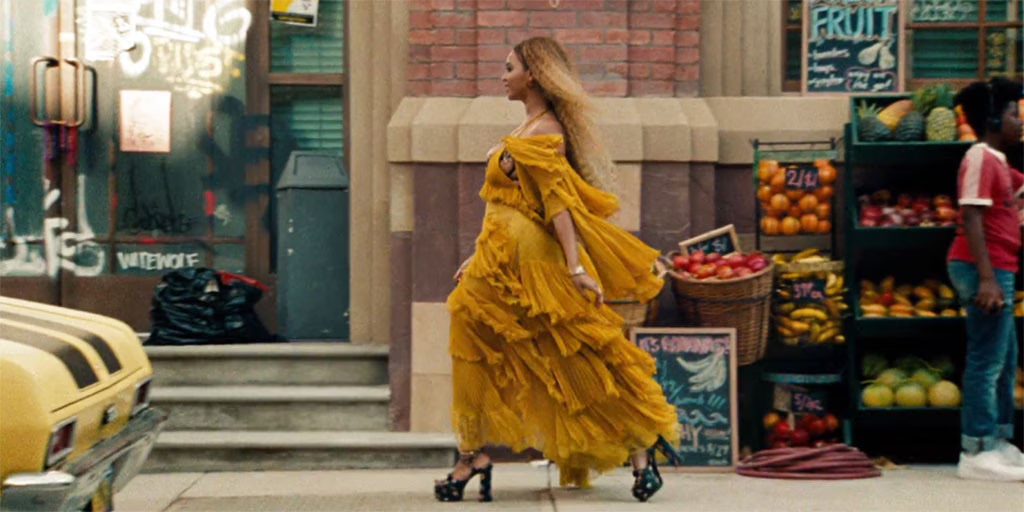
A New Template for the Visual Album
What Beyoncé delivered wasn’t simply an album with accompanying music videos. Lemonade was a 65-minute film, a full artistic work that blended music, spoken word poetry, cinematography, and narrative into something the industry had no proper category for.
Drawing on the poetry of Somali-British writer Warsan Shire, the album wove Black literary tradition into the heart of mainstream pop culture. The visuals, directed across multiple collaborators, referenced everything from Julie Dash’s *Daughters of the Dust* to Yoruba spirituality, creating a visual language rooted in the African diaspora that millions of people encountered, perhaps for the first time, through Beyoncé’s lens.
The ripple effects were immediate and lasting. The visual album format, once a niche experiment, became a legitimate artistic aspiration. Artists from Frank Ocean to Thom Yorke to Sabrina Carpenter took inspiration from Lemonade‘s model proving that an album could be cinema, poetry, and music at the same time without sacrificing any of the three. Beyoncé hadn’t just released a record; she had expanded what a record could be.
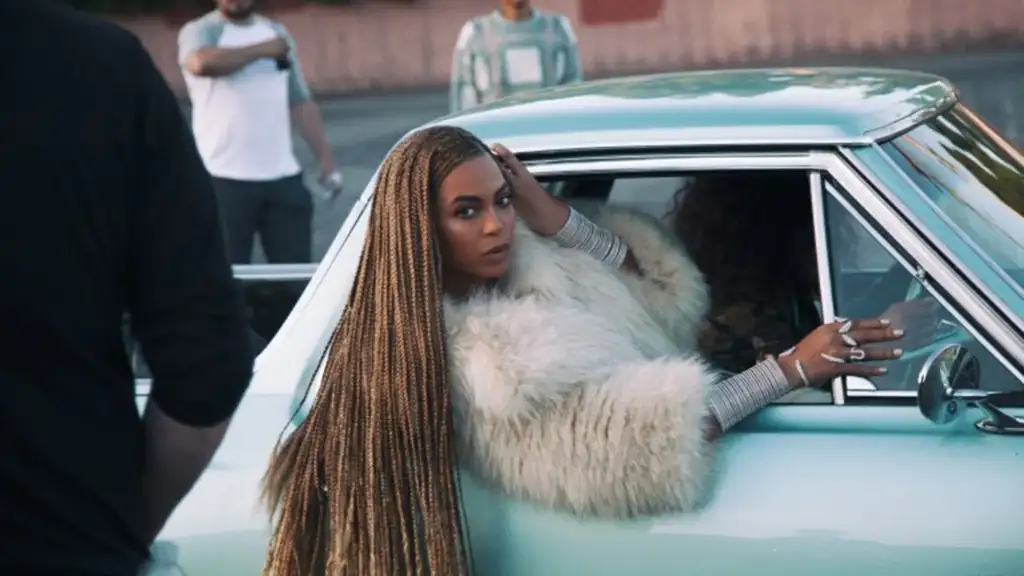
Black Womanhood Centered, Unapologetically
For all her career, Beyoncé had been a global superstar beloved across races, demographics, and continents. But Lemonade marked a deliberate, historic shift. It was her first direct, unambiguous call to the Black community, and specifically to Black women. Nothing about it was coded or cautious.
The album arrived in the thick of the Black Lives Matter movement, when the grief and rage of Black America were boiling over in full public view. It didn’t sidestep that reality it inhabited it. The mothers of Trayvon Martin, Eric Garner, and Michael Brown appeared in the film, their faces a profound, wordless testimony. Beyoncé used her unparalleled platform not to gesture at social issues from a safe distance, but to place Black women’s pain and resilience at the absolute center of the story.
The album sparked national conversations about race and feminism on social media, in the press, and in everyday life that extended far beyond music. It also reflected something deeply personal: the cycle of betrayal, anger, mourning, and hard-won love that plays out in Black women’s interior lives, rarely given this kind of monumental, big-budget artistic treatment. Lemonade said, plainly and loudly: this story matters. You matter.
From Pop Culture to Academia
It is one thing for an album to top charts. It is another for it to enter university syllabi.
Lemonade earned a Peabody Award and four Emmy nominations, a near-unheard-of achievement for any music artist. But perhaps more telling was what happened in classrooms. Universities including Tulane, Louisiana State, and the University of Texas developed courses dedicated to studying the album’s themes, composition, and cultural significance. It was assigned reading. It was cited in dissertations. It became a lens through which scholars examined Blackness, womanhood, Southern Gothic imagery, and the politics of forgiveness.
This wasn’t an accident. Lemonade was built with that kind of intellectual density, a work that rewarded close reading the way great literature does. Beyoncé had always been a meticulous artist, but with Lemonade she made a record that operated simultaneously as pop spectacle and serious cultural text, comfortable in both the arena and the lecture hall.
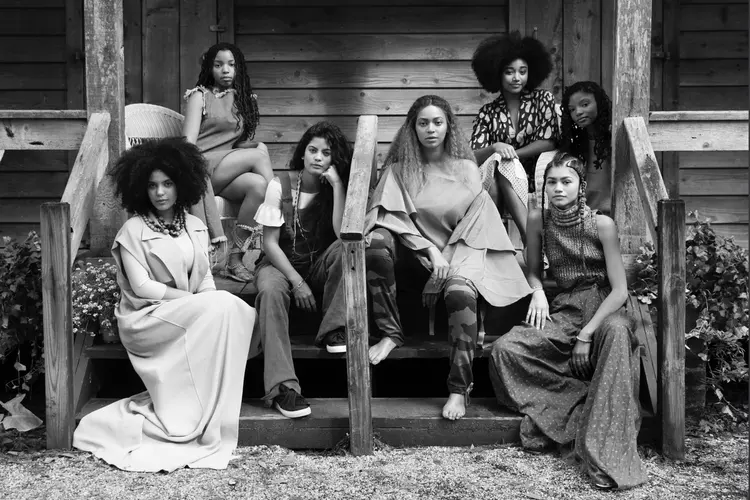
The Legacy, a Decade Later
Ten years on, it is almost impossible to overstate what Lemonade set in motion. Rolling Stone named it the No. 1 album of the 21st century. Its influence on fashion, language, and visual art continues to show up in ways both obvious and subtle from the “Lemonade” braids that swept style culture to parodies on “The Simpsons” and “Saturday Night Live” that confirmed its place in the popular imagination.
More significantly, Lemonade redrew the blueprint for what a career-defining artistic statement looks like. It proved that a Black woman at the peak of mainstream stardom could make her most personal, most political, most uncompromising work and that doing so would not shrink her audience but expand it. That lesson has not been lost on the generation of artists who followed.
But even in the context of everything that came after, “Lemonade” stands apart. Some albums soundtrack a moment in time. This one made a moment and then stayed.
Read more Music stories from KLATMAG
Written by Maria Jonah