For Bablu Shikdar, being the “class clown” was never simply about getting a laugh.
Known for his work as an award-winning presenter, creator and speaker, Bablu has built a career around entertainment, community, culture and sport. But behind the humour is a much more personal story, one shaped by identity, difficult experiences, isolation, resilience and the lessons that come with growing up.
Now, he is turning those experiences into his debut book, The Notebook of a Class Clown: A Life of Lessons, launching this September.
The title might immediately bring to mind the funny kid at the back of the classroom, but for Bablu, the class clown represents something much deeper. Humour became a way of navigating the world.
“I’ve always been funny, the loudest, and always laughing,” he tells KLAT. “Comedy and humour was one of the things that carried me throughout my life.”

Growing up as a person of colour in a predominantly white school, Bablu says humour often became a defence mechanism. He learned how to read people, diffuse situations and make difficult moments a little easier through laughter. At a time when he was already being singled out because of the colour of his skin, humour gave him another way to define himself.
“I already stood out,” he explains. “I faced crazy racism and people made their own judgements of me growing up, just because of the colour of my skin.”
Rather than allowing those experiences to become the entire story, Bablu found a way to navigate them on his own terms. The humour wasn’t necessarily about ignoring what was happening—it was about finding a way through it.
“I also think it’s a mirror to life,” he says. “Seeing the funny sides of things can make those things that much a little easier.”
That idea sits at the heart of The Notebook of a Class Clown. While the book draws from Bablu’s own experiences, its purpose extends far beyond telling his story.
For Bablu, writing the book is another extension of the work he has already been doing throughout his career: making people laugh, helping them learn and inspiring them to see what is possible.
“The reason I wrote this book is the same reason I do what I do in my everyday work and life: to laugh, learn, and inspire,” he says.
There is also something deeply personal behind that mission. Bablu remembers periods of growing up when he felt lonely and isolated, without the guidance or role models he needed. Through the book, he hopes to offer someone else the kind of perspective he once needed himself.
“This is my way to be like, it’s cool, you’ll face some challenges but life is all about lessons and blessings,” he explains. “Some are good and some you need to take in your stride.”

And that idea of learning from life rather than simply looking back at it is what makes A Life of Lessons such an important part of the book’s title.
Bablu isn’t asking readers to simply read about his experiences and move on. He wants them to look inward.
One of the book’s biggest themes is self-reflection: asking ourselves why we behave the way we do, why certain things affect us, what excites us and what our experiences are trying to teach us.
The final chapter takes that idea even further, offering prompts designed to encourage readers to reflect on different areas of their lives, from physical wellbeing and relationships to interpersonal connections, mindset and self-love.
“I don’t think a lot of us have faced our own thoughts much,” Bablu says.
It’s a great observation in a world that rarely encourages us to slow down. Between work, social media, responsibilities and the pressure to constantly keep moving, simply sitting with our own thoughts can feel like a luxury.
For Bablu, it shouldn’t be. His debut book is also an independent project, meaning he is funding the first print run himself through pre-orders and supporter bundles. The journey hasn’t been easy, but the response from his community has made the challenges worthwhile.
“Self funding is not easy, but seeing that people believe in your mission makes it that much more worth it,” he says.
And that support has clearly meant more to him than simply helping get a physical book into people’s hands.
“This book is not done in vain. It’s for the people,” Bablu says. “To see in real time how this book makes them feel is exactly why it exists. It’s there to help.”
For an independent creator and freelancer, having people invest their own money into something you’ve created is no small thing. Bablu’s reaction to that support is simple: gratitude. “Like people invested their own money!!! What??? I’m beyond grateful.”
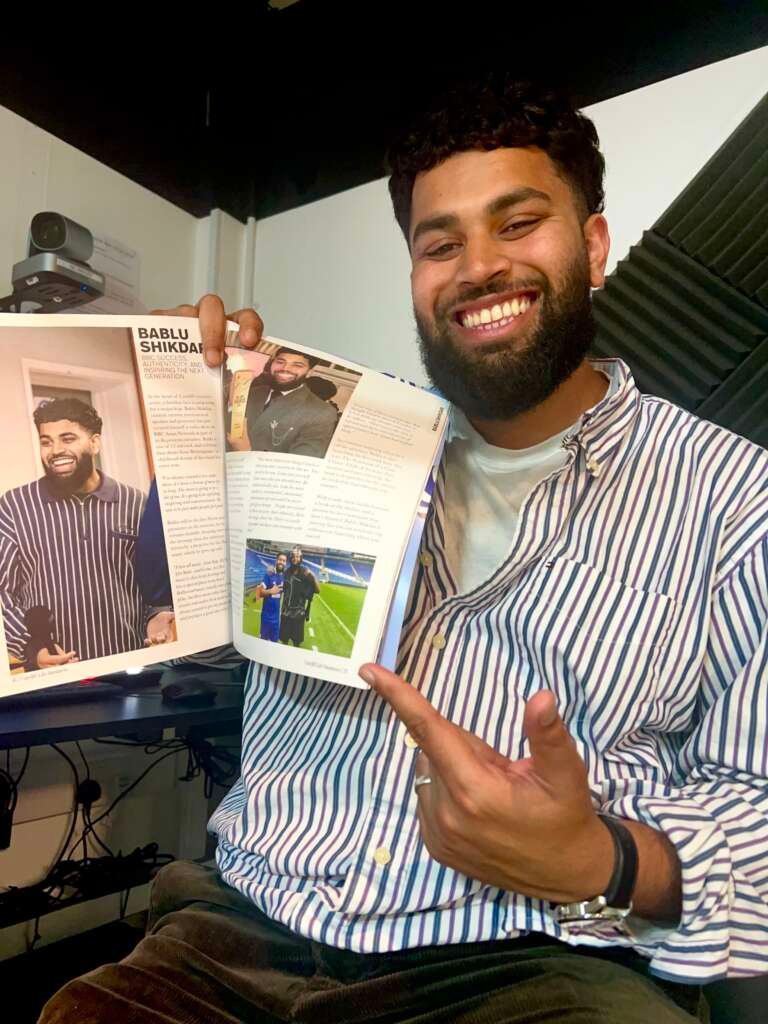
Ultimately, however, Bablu doesn’t want The Notebook of a Class Clown to be something readers consume once and put away. He hopes it becomes something they return to whenever they need another perspective.“I hope they keep revisiting when they need it,” he says.
Perhaps the most important message he wants readers to take from the book is that a difficult chapter does not mean the story is over.
“Life is not over after a tough period of time, but a restart,” he says. “That you can and will achieve anything and that nothing ever moved without a little support and love behind it.”
And then there is another lesson, one that feels particularly fitting for someone whose life has been so closely connected to humour and entertainment: you are allowed to enjoy your life. Bablu hopes readers give themselves permission to sit back, take a breath and simply enjoy being where they are.
“You don’t need to climb Mount Everest to deserve a break,” he says.
It is a fitting philosophy for The Notebook of a Class Clown: a book born from laughter, shaped by difficult experiences and ultimately rooted in the belief that every chapter, good or bad has something to teach us.
Get Bablu Shikdar’s New Book The Notebook of a Class Clown: A Life of Lessons
Read more Art and Culture stories from KLATMAG
Written by Angel Joanne Okonkwo