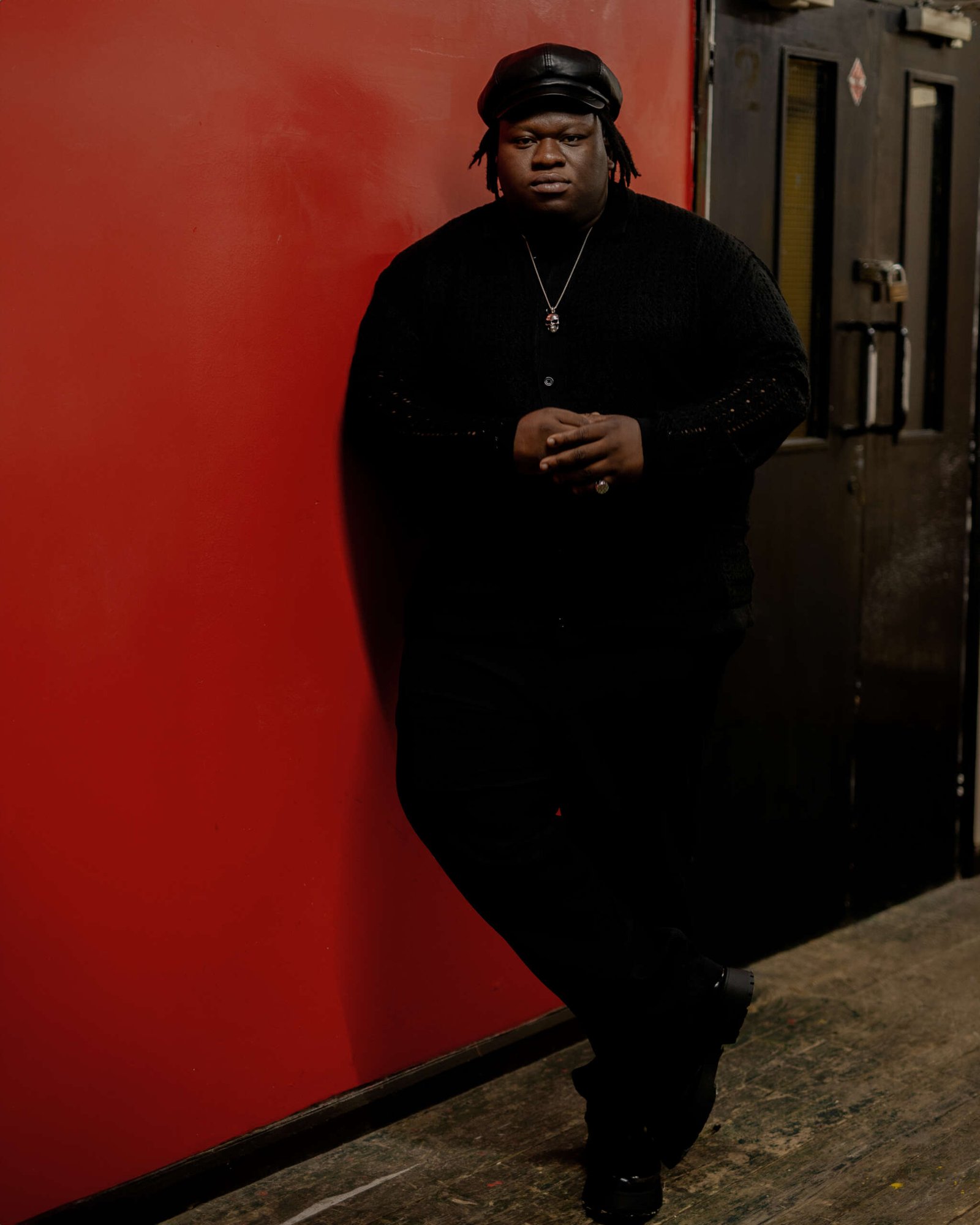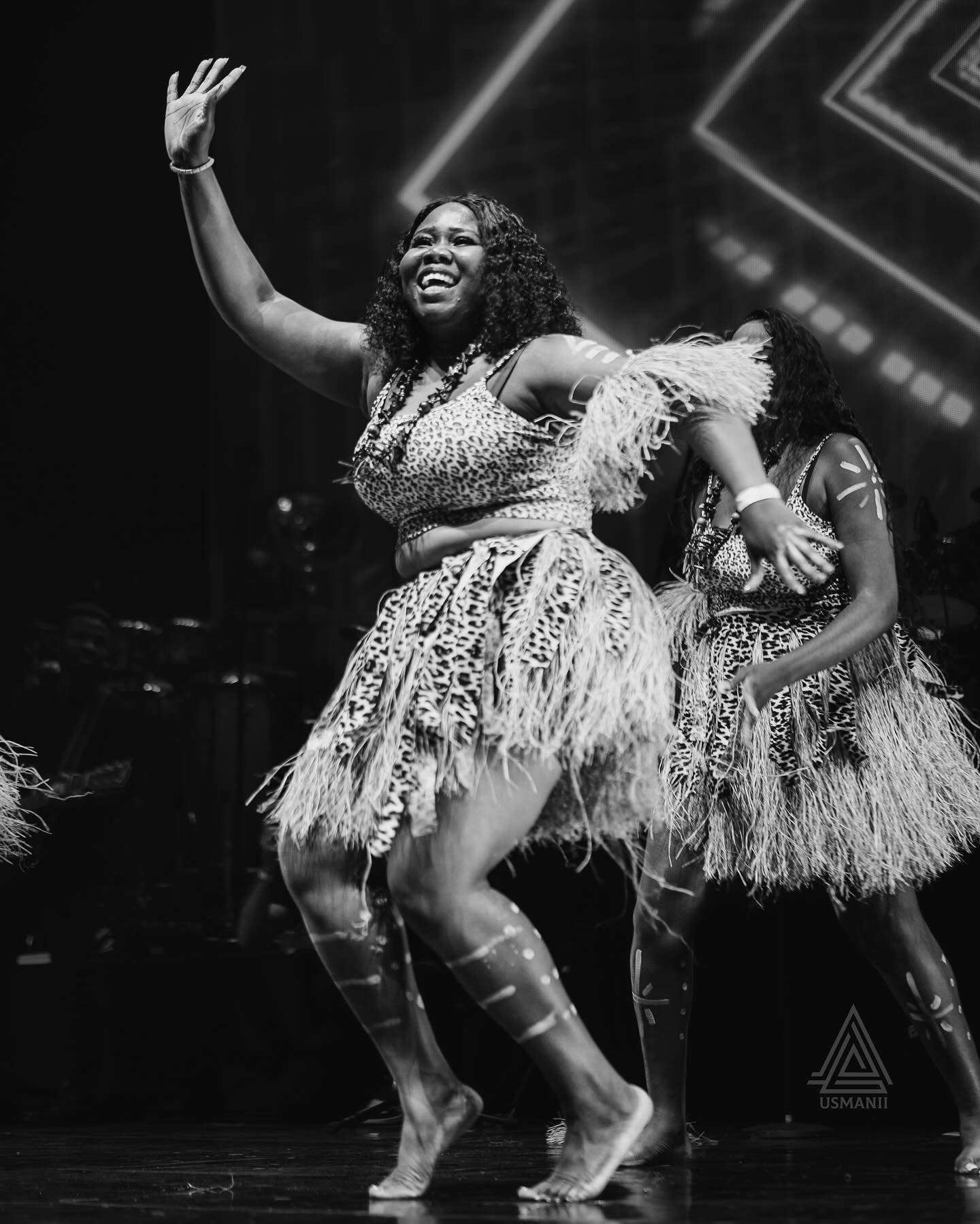
How Chikamso turned childhood competitions in an Enugu compound into a stage career that has taken her from Nigerian weddings to OVO Arena Wembley.
By Chinyere Chukwudi-Okeh | Writer, critic and Founding Director of C3 Centre for Creativity and Culture CIC
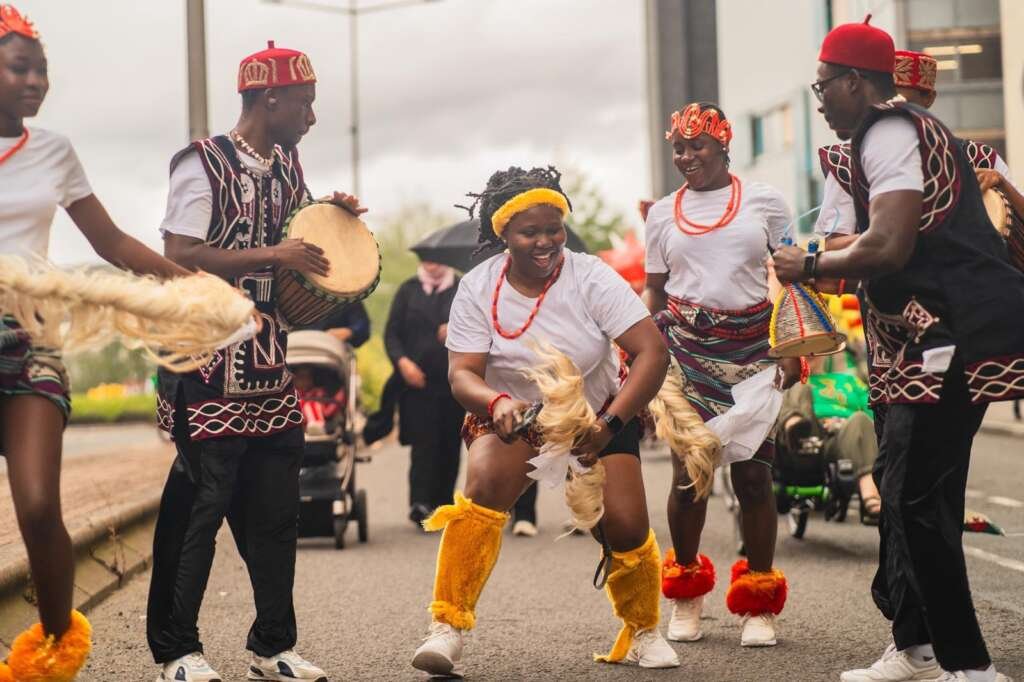
On a summer evening at the Igbo Day Festival, in a park thick with the smell of jollof rice and the sound of talking drums, a woman in a red-and-black wrapper danced her way into the centre of a circle of cameras. Her feet, decorated with white cam wood patterns, moved so fast they blurred against the grass. Around her, elders in isiagu and okpu agu, and women in ogodo and gele, lifted their phones. A trophy would come later, a tall silver one, for second place, that she would hold up laughing in the fading light, a horsetail fan still swinging from her other hand. But in that moment, nobody was thinking about placement. They were watching a woman perform the thing she has done since before she could walk properly, turning a body into a story.
Her name is Chikamso Jacinta Adinde, though she performs as Achikolo Global.
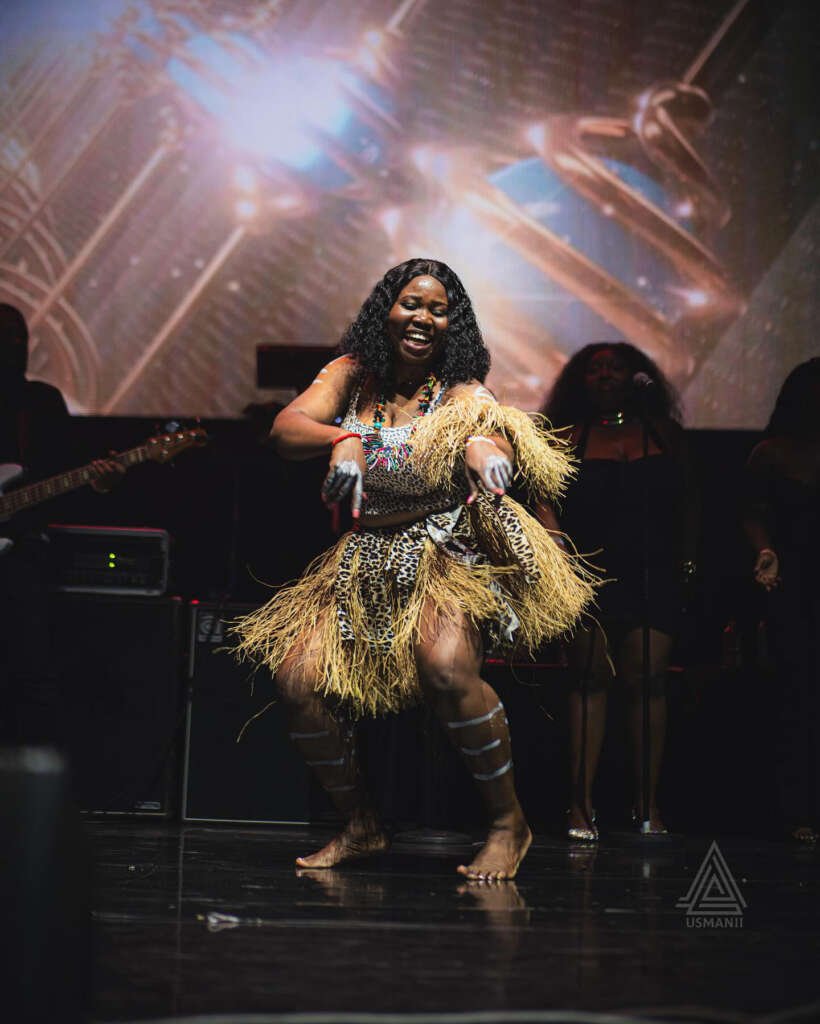
one of her signature performance looks.
Depending on which room you meet her in, she is a lot of things. Ask the residents she has supported through the British care system, and she is a Care Assistant fluent in medication charts and safeguarding protocols. Take a peep at her academic credentials, and she is an MSc graduate in Business with Human Resource Management, alongside a Bachelor’s degree in International Relations. But ask a crowd at Wembley, or a bride on her wedding day, or a room full of children at a cultural workshop, and there is only one answer. She is a dancer, one who leads the Enugu State Association UK’s dance troupe and teaches traditional Igbo dance to young Igbo men and ladies at OZO Sports Club, carrying two working lives, care and choreography, with the same discipline.
Chikamso’s dancing began outside her family’s compound in Nigeria, where evenings sometimes turned, without warning, into competitions.
“My parents were dance leaders in their respective groups, and my grandmother was also a dancer, so dance was just a normal thing for us at home,” she said. “Most times we had family time where everyone comes outside our compound, my mum starts singing and clapping her hands while she sets my siblings and me in a dance competition to know who dances best and who needs more coaching.”
It is a small, vivid image of a mother turning bedtime into a talent show, using her own children as both performers and pupils, but it tells you almost everything about how Chikamso understands dance today. It was never simply entertainment in her house. It was inheritance. Weddings, church services and festival grounds became her early classrooms, and by the time she reached university, dance had already started paying her back. She won scholarships from her nursery years all the way through higher education, each one a small proof that the compound competitions had built something real.
“Dance became more than entertainment to me,” she said. “It became a way of expressing identity, celebrating our heritage, and connecting with people.”
A Night at OVO Arena Wembley
The invitation arrived quietly, through a message on Instagram. A member of Flavour’s crew wanted to know whether she would take charge of the choreography for his cultural dancers at the African Royalty Experience, and perform alongside them. There was something almost funny about it, how casually the message landed compared to what it would grow into. Within weeks she was standing under lights that turned the stage into what she still calls a small planet, sound rolling out so wide that even her own breath came back to her with a long echo. “It was affirmation that cultural expression, when presented with care and dignity, can find a home on any major stage,” she said.
Earlier that day, while the cultural dancers ran through their formations outside the main studio, she broke off into a solo, moving for herself, when Flavour walked out to see what the noise was. He didn’t just watch. He joined her, right there, and started asking questions. Where was she from? What gave her that kind of energy? “He said, you are amazing, you dance so good,” she recalled. When she told him her name, he turned to the people nearby and gave her an impromptu shout-out, telling them to follow her, to book her for their own events. It was only after mid-conversation that they realised how much they already had in common. Both of them had grown up in Enugu.
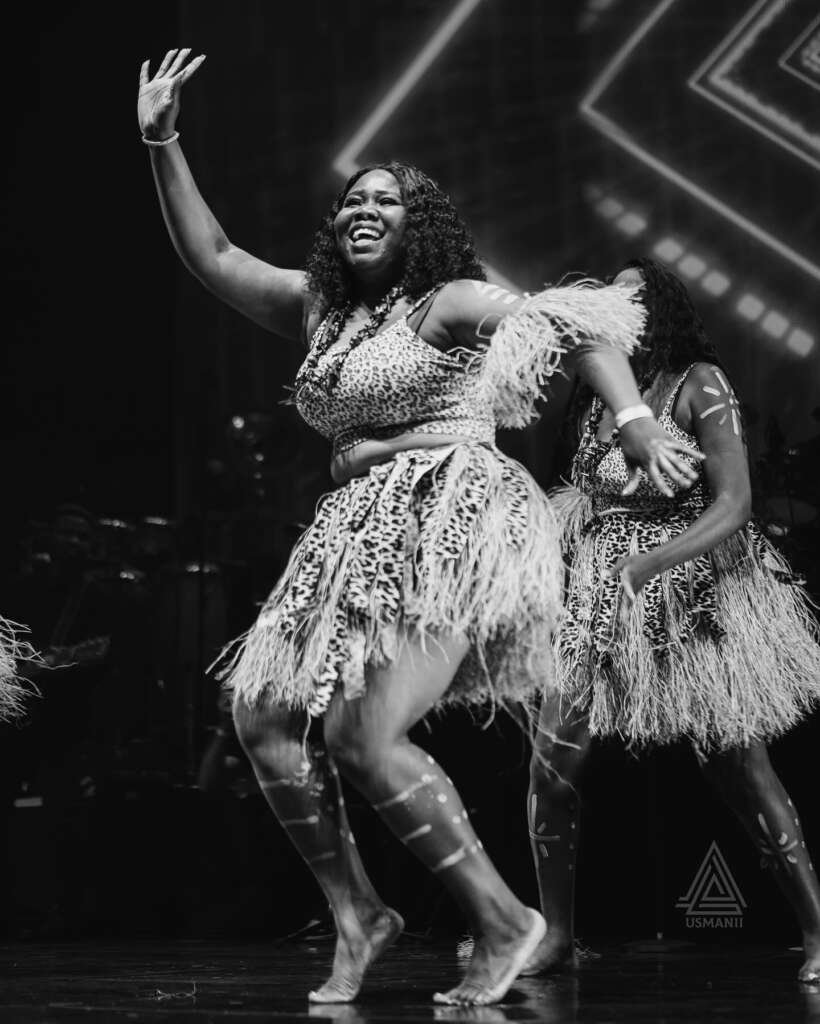
Being named command choreographer meant more to her than steps and formations. It meant stewardship. She had to take movements passed down through generations and shape them into something thousands of strangers, and the cameras trained on them, could read clearly in a matter of seconds, without losing the subtlety that gave those movements meaning in the first place. Some things she pushed forward so they could be seen. Others she let stay quiet, tucked into a shoulder or a shift of weight, reserved for the dancers who already understood them. Working inside Flavour’s company could easily have meant bending cultural dance to fit the more commercial pulse of Afrobeats, but she wasn’t interested in that kind of compromise. “On that stage we were storytellers first,” she said. “Movement as language, costume as text, and rhythm as punctuation.”
That instinct shows up in almost everything she choreographs. She doesn’t think of herself as inventing anything new so much as continuing a conversation that started long before her, one step answering the last, each gesture a sentence in a longer story about where a people come from. She is drawn, in particular, to the small movements that hold the most memory. A hand pattern. A shift through the torso. A foot rhythm that still carries, somewhere underneath it, the sound of market bargaining, or water being carried home, or a community mourning together. “Movement, to me, should be intelligible at multiple levels,” she said, “immediately affecting to the crowd, narratively precise to those who know the tradition, and aesthetically compelling to newcomers.” Onstage, she wears her heritage the way she was raised with it, openly, a braid of inherited ritual and family dance and the newer rhythms that migration has folded in along the way. There is a real weight to that. She is an individual artist up there, but she is also carrying something collective on her shoulders, and she is careful about it, refusing to let her culture flatten into spectacle just because more people are watching.
She came off that stage with a few things confirmed rather than newly discovered. A room that size has a way o f magnifying not just a dancer’s presence but every hour that went into preparing her, the clarity of her counts, the sureness of a transition, the quiet communication running between a lead and the dancers following her. She felt, too, how much the night depended on trust, Flavour’s team handing her real creative control, her own dancers meeting that with everything they had. And she left thinking about what it means for cultural movement to be seen on a stage that big, how it becomes a kind of record, proof for a younger performer somewhere in the crowd that they might one day stand in the same light. “The audience’s cheers were not just applause for a show,” she said. “They were an acknowledgement that stories rooted in specific communities can speak to many.”
She still carries the hum of that crowd under her skin, she says, and with it a renewed sense of what she owes the tradition every time she teaches a new movement or steps out to perform one herself. That sense of duty is easier to understand once you look at what she has already built away from any stage as big as Wembley’s.
Chikamso’s case stands out because of the deliberateness behind why she’s on stages like OVO Arena Wembley, and it’s not just their scale. She doesn’t describe her leadership of dance troupes as an accident of talent. “Leadership came naturally because I wanted to help others develop their confidence and appreciate the importance of cultural performance,” she said. “I believe dance should unite people, build discipline, and inspire pride in our heritage.” That’s a mentorship model built into her performance career, and it shows up in the workshops she runs and the younger dancers she’s actively training to carry the tradition forward.
Her account of Igbo cultural dance carries a preservation argument that goes well beyond sentiment. “Igbo cultural dance represents our history, values, traditions, and identity,” she said. “Every movement tells a story and reflects generations of cultural knowledge.” That claim, paired with her track record of teaching the form to young Igbo men and ladies at OZO Sports Club and leading it onto a stage the size of OVO Arena Wembley, places her among the people actively building infrastructure around a living tradition, in a diaspora context where that tradition faces real pressure to thin out generation to generation. She has choreographed for weddings, comedy shows, charity galas, and album launches for artists, work that has made her a familiar name on London’s own event circuit, not just Enugu’s.
She gives all of it a single throughline, and that’s the part most likely to land with anybody assessing exceptional promise or contribution. “I hope people remember me as someone who used dance to preserve, celebrate, and elevate African culture,” she said. “If my work inspires young people to embrace their heritage with pride and helps African culture reach even wider audiences, then I will consider my journey truly meaningful.” That said, long-range cultural ambition is backed by the same rigour she brings from her academic and professional life. “My academic background has strengthened my organisational, leadership, and communication skills, which are invaluable when leading dance groups, organising rehearsals, coordinating performances, and managing cultural projects,” as she put it. Artistic authority, operational discipline, and a stated mission to widen a culture’s reach make the actual case for why she’s worth noticing.
Chikamso is still the girl her mother once set dancing in a compound in Enugu, only now the whole world has been invited to watch.