By Chinyere Chukwudi-Okeh | Creativity, Arts and Culture Reviewer and Critic
Oluwafunbi and the Long Work of Being Seen
There is a mannequin named FELECIA who travels everywhere with Oluwafunbi Mafoluku. She goes to photo shoots, to stages, to music videos, dressed and styled with the same intention he brings to his own appearance. She represents the alter ego of his female fans – bold and mysterious – the part of the audience he refuses to leave behind when he walks into a room. If you want to understand what kind of artist Oluwafunbi is, FELECIA is not a bad place to start. She tells you that he thinks about performance as a total world, not a song with a stage around it, but an environment with its own logic, its own characters, its own internal life that continues beyond the last note.
Oluwafunbi grew up in the famous Lagos, and it’s become a place that has shaped how he sees himself and expresses his creativity. From the confidence of the people around him to the energy and self-expression that filled the city, he learned early that presence matters – how you show up, how you carry yourself, and how you connect with others. Music was at the centre of his home. His parents listened to different genres, but they always believed that a song should carry meaning. That early lesson that music should leave something behind continues to guide everything he creates today. You hear it in his music, and you feel it when he performs.
But it was Afrobeats that showed him what was possible. He never treated it as a genre he admired from outside, but as evidence, concrete and documented, that stories rooted entirely in Nigerian experience could travel to any stage in the world without losing what made them true. He watched artists from his own tradition fill arenas in cities he had only seen in photographs, and he filed this away not as inspiration in the vague motivational sense but as information. The distance between Lagos and those stages was crossable. He began crossing it.
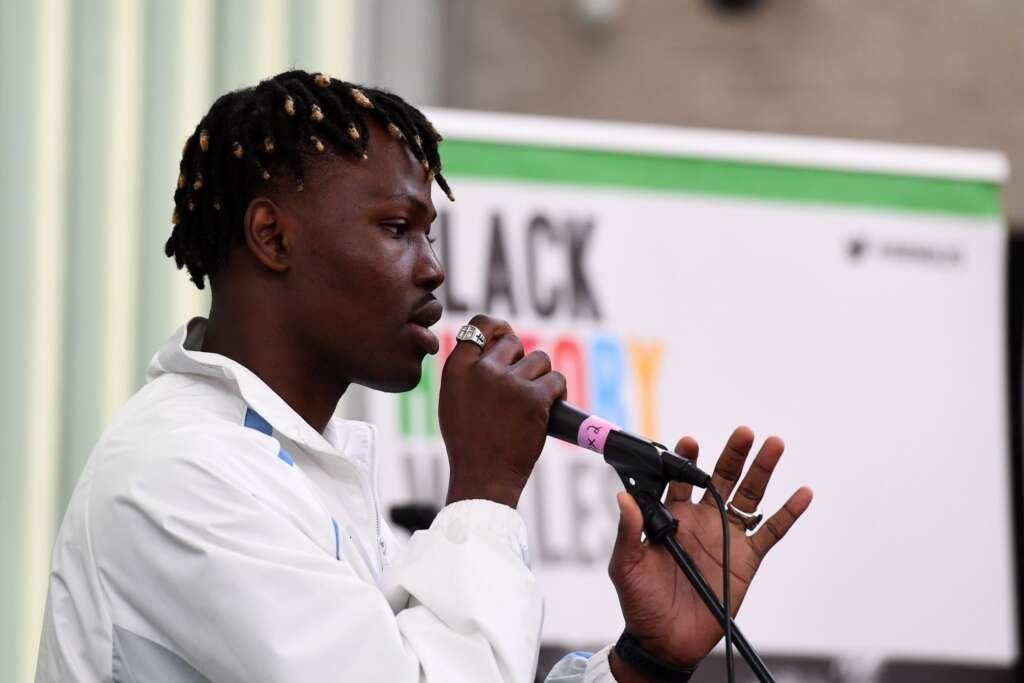
Cardiff was the first serious crossing. Distance from home clarified things that proximity had kept blurry. In Lagos his roots were simply the ground he stood on, present the way air is present, unremarkable because it was everywhere. In Wales, those same roots became visible, something with texture and weight and value that he could examine and make decisions about. The city also gave him a slower kind of time, more interior, more reflective. “Lagos gave me rhythm, confidence and colour,” he tells us. “Wales gave me space, reflection and a different kind of creative challenge. I now exist between both worlds, and that has shaped my music and performance.”
That doubled existence is the source material.
Playboy Kuti emerged from that source. The name announces something. It is not the name of a person making modest claims or waiting for permission to occupy space. It carries the confidence of Lagos and the intentionality that Cardiff taught him, a performance identity built to hold both cities at once. On stage, he delivers Afropop rooted in West African melodic tradition with the kind of physical presence that communicates before the music begins. Fashion is part of it. Movement is part of it. The relationship with the audience is part of it. When he talks about his creative process, he is precise about this. “For me, the final production includes the song, the visuals, the styling, the performance energy and the way the audience receives it. The music is the centre, but the experience around it helps people remember it.”
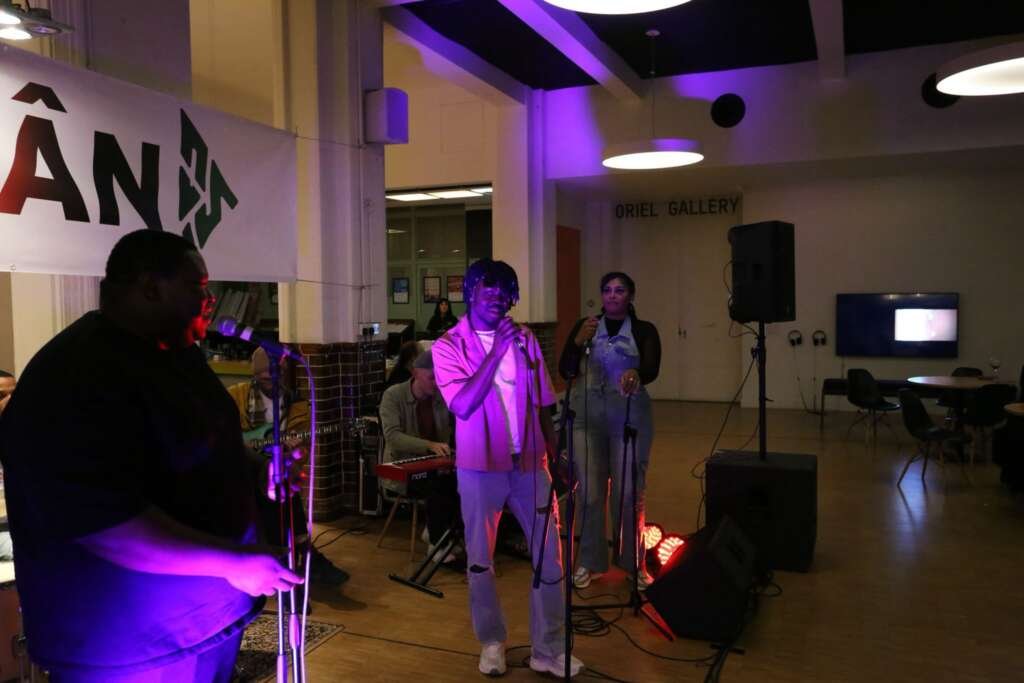
The stages have accumulated. He shared a stage with Lil Kesh in London, a performer he had watched from Lagos, and standing there changed his understanding of his own timeline. “It made the dream feel closer,” he says. “Performing on a stage connected to someone I had looked up to showed me that my journey was moving from imagination into real life.” A nomination for Best Afrobeats Track at the Black Welsh Music Awards arrived without warning and settled something in him that winning might not have settled as cleanly. “Sometimes you do not need to win for something to change your mindset. The nomination alone showed me what was possible.” Cardiff, London, Birmingham, Manchester. He has built his audience the way serious artists build audiences, by showing up in every room and leaving something real in it.
Afrobeats itself needs to be properly understood to grasp what he is doing within it. The genre has a long ancestry: highlife, jùjú, fuji, the radical political music of Fela Kuti, the street sounds of Lagos that have always done more than entertain. When Burna Boy collected a Grammy, when Wizkid sold out the O2, what the world was witnessing was not a new sound arriving. It was an old tradition finally getting the international infrastructure it had always deserved. Oluwafunbi inherited that tradition in the most literal sense, through his upbringing, through the music in his house, through a city that made him rhythmically literate before he had a stage to stand on. He is now one of the people carrying it into spaces it has not yet fully entered.
Wales is one of those spaces, and the specifics matter. Cardiff is not London. The African diaspora in Wales has deep roots, deeper than the popular imagination tends to allow, but the performing arts infrastructure to support Black and African creative life here is still under construction. Oluwafunbi is one of the people building it while also performing inside it. As co-lead of Amplify, the Welsh cultural advocacy initiative whose tagline is “Where music speaks truth,” he works to increase visibility and opportunity for artists across Wales. As founder of OTID Entertainment, he has created a structure through which African performance culture and Welsh creative life can develop together. Through the AfroWales Diaspora Sound Lab, he places young people inside professional performance environments at the age when proximity to that world matters most. None of this is separate from his music. It is the ecosystem his music requires, and he is building it because it does not yet fully exist.
His vision runs further than Cardiff in every direction. He wants African music at Madison Square Garden. He wants it at the O2. But the more revealing part of his vision is what he says next: that he wants the exchange to move in both directions, that he wants the world to come to Africa and experience it properly, its stages, its audiences, its cities, its sound. “Africa is not just a source of rhythm or inspiration,” he reflects rather philosophically. “It is a place with deep creative power, and the world needs to see Africa for the true beauty it is.” That correction, from export to destination, from resource to place, is the one he has organised his entire creative life around making.
He built everything described here from nothing, in a country that required him to reconstruct his professional network, his confidence, and, at times, his basic sense of who he was outside the context that had formed him. He did it by performing wherever a stage was offered, by refusing to diminish what he carried, by staying in faith with the roots that distance had helped him finally see. “African creativity is not a trend,” he proudly announces. “It is a powerful cultural force.”
FELECIA already knew that. She has been there for every performance.
“Music gives me a reason to keep moving,” Oluwafunbi says. “It reminds me that pain, pressure and uncertainty can still become art.”
The interesting thing about artists like Oluwafunbi is that their work is never only about the songs they release. It is about the worlds they create around those songs, the people they bring together, and the spaces they make possible for others. As African music continues to find new audiences across the world, the artists shaping that movement will not only be those on stage but also those building the connections that allow culture to move further.
Oluwafunbi’s journey reflects that wider shift. He is part of a generation demonstrating that African creativity can travel without losing its identity, and that art can serve as a meeting point among communities, countries, and experiences. His work is a reminder that the next chapter of global music will be written by those who are heard and by those who create the spaces where new voices can be discovered.
Written by Chinyere-Okeh | Creativity, Arts and Culture Reviewer and Critic